



How to Map Zero-Volume Keywords to High-Converting Bottom-of-Funnel Assets

How to Map Zero-Volume Keywords to High-Converting Bottom-of-Funnel Assets
Let’s talk about the biggest lie in digital marketing: search volume. Most business owners and marketing directors are obsessed with vanity metrics. They want to rank for keywords with 10,000 searches a month, believing that a flood of traffic will magically fix their revenue problems. But here is the hard truth: high-volume keywords almost always equal low buying intent. If you want to drive actual revenue, operational efficiency, and scalable growth, you need to flip the script. That is exactly why mastering zero volume keywords SEO is the ultimate cheat code for B2B enterprises, nonprofits, and government contractors.
At LSI Media, we do not just build pretty websites. Since 2012, when Idris and Sabine Grant founded our agency in Leesburg, Virginia, we have operated on one core principle: the exact same project management discipline used to modernize a federal government program applies perfectly to your digital strategy. Creative work without systems is just noise. And ignoring hyper-specific search queries because a software tool told you to is a failure of your marketing system.
When you target ultra-specific, long-tail queries, you aren’t chasing browsers. You are catching buyers. Here is the exact playbook for identifying these “hidden” keywords and mapping them to bottom-of-funnel (BOFU) assets that actually convert.
Why Zero Volume Keywords SEO is Your Ultimate Growth Lever
If you use standard SEO tools to research highly technical or niche industry terms, the software will often return a search volume of zero. But SEO tools notoriously underreport long-tail data. A query might show zero searches in a tool, but in reality, it’s being searched 15 times a month by federal procurement officers, association directors, or enterprise decision-makers who have their budgets approved and their checkbooks out.
Think about it. Someone searching for “project management” is just looking for a Wikipedia definition. Someone searching for “IT portfolio management and modernization for federal agencies” knows exactly what they need. They are at the absolute bottom of the funnel.
Your goal isn’t to get a million eyeballs on your site. Your goal is to get the right eyeballs. By building content around these highly specific queries, you establish instant authority, bypass the massive competition fighting over broad terms, and dramatically increase your conversion rates.
Step 1: Extract the Data from Your Frontline Systems
Stop looking at keyword tools and start looking at your business systems. The best bottom-of-funnel keywords are hiding in plain sight. You just need the discipline to extract them.
- Talk to your sales team: What are the exact questions prospects ask right before they sign a contract or issue an RFP?
- Audit your inbox: Look through your client onboarding emails and support tickets. The hyper-specific language your clients use is exactly what they type into Google.
- Review your proposals: The pain points you address in your winning proposals are your zero-volume keywords.
For example, if you run a nonprofit, your donors aren’t just searching for “donate to charity.” They are searching for “tax-deductible corporate sponsorship for local youth education.” That is a zero-volume keyword phrase, and it is worth its weight in gold.
Step 2: Map the Intent to the Right Digital Asset
Once you have your list of hyper-specific keywords, do not just throw up a generic 500-word blog post. You have to match the intent of the searcher with a high-value, bottom-of-funnel asset. They are looking for proof, methodology, and execution.
Here is how you map them:
- For complex service queries: Build a dedicated landing page. When we handle website design at LSI Media, we architect WordPress sites so that these specific landing pages are easy to navigate and optimized from day one.
- For process and methodology queries: Use video. Explainer videos, kinetic typography, and animated content are incredible for breaking down complex workflows. If someone is searching for “how to implement DHS Trusted Tester standards,” a two-minute explainer video will convert far better than a wall of text.
- For proof of concept: Create case studies and whitepapers that can be downloaded in exchange for an email address, moving the prospect directly into your sales pipeline.
Step 3: Build Accessibility and SEO in from Day One
Here is where most agencies completely drop the ball. They design a beautiful asset, publish it, and then try to bolt SEO and accessibility onto it after the fact. That is incredibly inefficient. It wastes time, it wastes money, and it leaves revenue on the table.
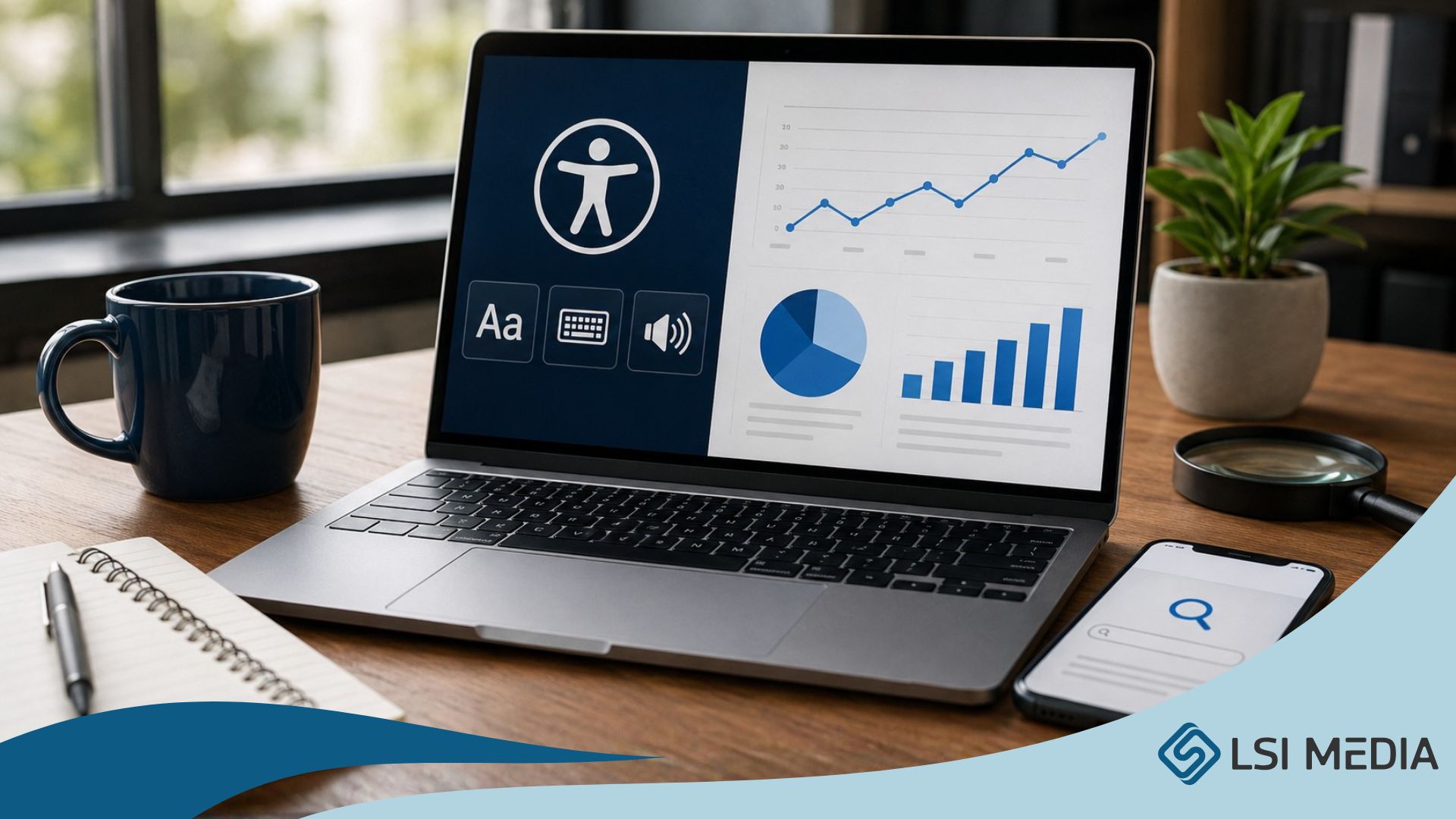
Your bottom-of-funnel assets must be accessible to everyone, full stop. At LSI Media, both of our founders hold the DHS Trusted Tester certification, and we build WCAG 2.1 AA accessibility into our process from the very beginning. Whether it is a PDF whitepaper, a presentation, or a dedicated WordPress landing page, Section 508 testing and remediation are part of the baseline project management process.
When you make your site fully accessible, you aren’t just complying with federal requirements—you are ensuring that the high-value decision-makers searching for your zero-volume keywords can actually consume your content and convert, regardless of how they access the web.
Step 4: Leverage AI Automation to Maximize ROI
You are time-poor. You do not have the bandwidth to manually create fifty different bottom-of-funnel assets and distribute them across the internet. This is where AI automation and transformation change the game.
Once you create a core BOFU asset based on a zero-volume keyword, you need a system to amplify it. Through strategic AI automation, we help organizations turn a single whitepaper or explainer video into a month’s worth of social media content. We build the content calendars, manage the day-to-day posting strategy, and ensure a consistent presence across your channels.
By conducting an AI audit, we can identify exactly where automation makes sense in your content lifecycle. You get the operational efficiency of an enterprise marketing team without having to bloated overhead. You build the asset once, and the system works for you.
Stop Chasing Vanity Metrics and Start Building Systems
Listen, if you are tired of feeling overwhelmed by digital marketing trends and frustrated by a lack of ROI, it is time to change your approach. Stop competing for broad, meaningless traffic and start owning the hyper-specific conversations your ideal clients are having.
Mapping zero-volume keywords to high-converting assets isn’t a hack. It is a disciplined, project-managed approach to digital media. It combines technical SEO, inclusive accessibility, high-end design, and AI-driven efficiency to build a machine that actually generates business.
You have the expertise. You just need the system to scale it. If you are ready to modernize your digital presence and start capturing the traffic that actually converts, it’s time to bring real project management discipline to your creative work. Let’s build something that works.
© LSI Media LLC


























































































































































































![How COVID-19 Changed the Way We Think About Office Technology [New Research]](https://www.lsi-media.com/wp-content/uploads/2020/12/5183-8616-OfficeTechnology_8XhtV1.jpg "How COVID-19 Changed the Way We Think About Office Technology [New Research]")